
Why Your Mouth Feels Worst at 4 AM (Nighttime Oral Biology)
What Your Mouth Is Actually Doing at 4 AM Nighttime oral health operates on a completely different set of biological rules than anything happening in your mouth during the day. When you fall asleep, your mouth doesn’t simply go quiet — it shifts into a distinct physiological state where its natural defenses power down on … Read more
What Your Mouth Is Actually Doing at 4 AM
Nighttime oral health operates on a completely different set of biological rules than anything happening in your mouth during the day. When you fall asleep, your mouth doesn’t simply go quiet — it shifts into a distinct physiological state where its natural defenses power down on a schedule, its chemistry turns hostile, and its resident bacteria reorganize into a more dangerous configuration. The dry, sour, faintly unpleasant sensation so many people notice at 4 AM is not random discomfort. It is the predictable endpoint of measurable overnight changes in saliva flow, pH, and microbial populations, all timed by your internal circadian clock.
Understanding these mechanisms doesn’t just explain morning breath. It reframes every decision you make before bed as a direct intervention in a biological process that quietly determines your long-term dental health.
The Circadian Architecture Behind Nighttime Oral Health
Your mouth runs on a 24-hour clock, and that clock is doing far more than tracking time. Research into oral circadian biology shows that the same internal timing system governing your sleep-wake cycle also regulates salivary gland activity, oral epithelial cell turnover, and even the expression of tissue-repair genes. The early morning hours — roughly 2 AM to 6 AM — represent the lowest point in this daily cycle, when protective systems reach their minimum output simultaneously.
This is why nighttime oral health problems cluster at a specific hour rather than spreading evenly across sleep. The circadian clock doesn’t just reduce saliva production; it also drives 24-hour variation in oral epithelial DNA synthesis and the activity of genes involved in tissue homeostasis and repair. Disrupting this rhythm — through shift work, late nights, or irregular sleep — doesn’t just make you tired. It destabilizes the biological maintenance your mouth depends on.
Melatonin, the hormone that rises as darkness falls, plays a role here too. Beyond signaling sleep onset, it appears to benefit alveolar bone remodeling by reducing the synthesis of RANKL, a molecule that drives bone breakdown. Your sleep hormones, in other words, are also bone-protecting hormones — which gives “get enough sleep for your health” a very literal dental meaning.
The Saliva Shutdown: Your Mouth’s Defense Goes Offline

Saliva is the most underappreciated element of nighttime oral health, and its overnight withdrawal is the root cause of nearly every symptom people experience at 4 AM. During waking hours, saliva functions as a continuous, multi-layered defense system. It buffers acid, delivers antimicrobial proteins, remineralizes early enamel damage with calcium and phosphate, and physically rinses food particles and bacteria from tooth surfaces. When you fall asleep, this system reduces to a fraction of its daytime capacity — and it does so on a schedule.
The shutdown is programmed, not passive. The circadian clock directly modulates salivary gland activity, which is why chronic disruption of this system is implicated in conditions of persistent dry mouth including Sjögren’s syndrome, an autoimmune disorder affecting the salivary glands. When flow drops, every downstream defense weakens at once: acid buffering slows, remineralizing minerals stop arriving at the enamel surface, and the mechanical washing that keeps bacterial populations in check largely halts.
Chronotype shapes how severely this hits you. Evening chronotypes — people whose biology runs later — experience delayed saliva production and reduced morning flow compared to earlier chronotypes. Research links irregular sleep after 11 PM to higher rates of tooth decay, and the mechanism is straightforward: going to bed late means eating late, which means introducing fermentable carbohydrates into a mouth whose salivary defenses are already winding down. If you are a natural night owl, this compounding effect is one of the most concrete reasons to shift your last meal earlier.
The Overnight pH Drop and the Acid Attack You Never Feel
Here is the mechanism that ties the damage together. During sleep, saliva pH does not hold steady — it falls measurably over the course of the night. Research tracking the sleeping mouth found that saliva pH drops from approximately 7.7 during the day to around 6.6 overnight. That shift happens silently, without any sensation you would notice in the moment, while enamel sits exposed in an increasingly acidic environment for hours.
A whole-mouth reading of 6.6 sounds safely above the critical demineralization threshold of approximately 5.5, but that number is an average. Inside the sheltered architecture of plaque biofilm, along the gumline, and in the tight spaces between teeth, localized pH can fall far lower — especially when any fermentable carbohydrate from a late snack is present and fueling bacterial acid production. In those microenvironments, acid exposure can persist uninterrupted for the entire night.
During the day, a swallow of saliva or a sip of water quickly restores neutrality. At night, with buffering offline, there is no reset. This is the acid attack you never feel, and it explains something that confuses many people: why patients who brush diligently still develop cervical lesions and sensitivity over time. The damage doesn’t happen during brushing. It accrues silently between midnight and 6 AM.
Consider a concrete example. Someone has a glass of wine and a few crackers at 11 PM, brushes quickly, and goes to sleep. The residual sugars and acids sit in a dry, unbuffered, increasingly acidic mouth for the next seven hours. By 4 AM, the cumulative enamel exposure to that acidic environment far exceeds what the same snack eaten at noon — with full salivary defenses active — would ever produce.
Photo by Andrea Piacquadio on Pexels
How Your Oral Microbiome Reorganizes While You Sleep
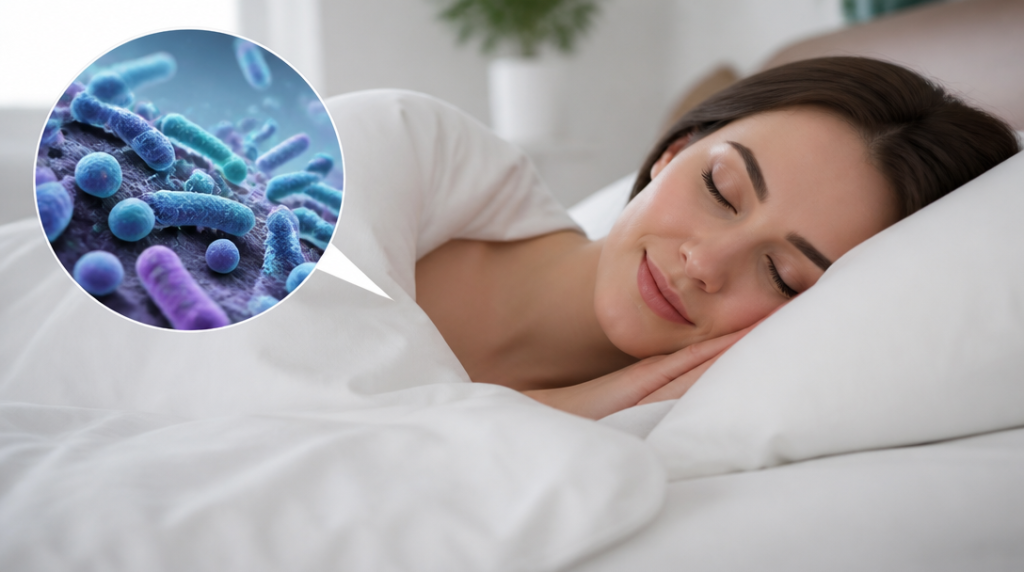
The sleeping mouth is not just drier and more acidic — its microbial community actively reshuffles into a more pathogenic configuration. Studies of oral biofilms across the sleep cycle show that the relative abundance of Prevotella increases between 4 AM and noon, while Gram-negative species more broadly rise across an even wider window stretching from 4 AM through the afternoon. This is not random fluctuation. It is a patterned, circadian-linked shift in who dominates the oral environment.
Prevotella and Fusobacterium are both associated with periodontitis and gingival inflammation. As salivary flow drops and the oxygen environment shifts in a closed or partly open mouth, conditions favor these Gram-negative, anaerobic organisms over the beneficial species that characterize a healthy daytime microbiome. The result is a nightly swing toward an inflammation-prone microbial profile — one that, in healthy individuals, partially reverses as saliva resumes in the morning, but in people with existing gum disease or poor sleep, may establish more permanently.
Oral microbiome dysbiosis works precisely this way: not through the arrival of a foreign pathogen, but through opportunistic resident microbes overgrowing when protective conditions recede. Reduced saliva, stable warmth, lower oxygen levels, and the presence of overnight food residue create exactly the environment where that overgrowth occurs. This is why understanding your oral microbiome matters well beyond morning breath — it is a direct window into your gum disease risk.
Sleep duration compounds this further. Research links short sleep — six hours or fewer — to decreased oral microbial diversity, with a statistically significant difference identified in studies comparing short versus adequate sleepers. Lower microbial diversity is a well-established marker of a less resilient, more disease-prone ecosystem. Separately, S. mutans, the bacterium most directly responsible for dental caries, has been found to increase in saliva with shorter sleep duration. The relationship between sleep quality and oral health runs in both directions: poor sleep degrades the oral environment, and emerging evidence suggests oral dysbiosis may in turn contribute to disrupted sleep regulation.
Morning Breath, Dry Mouth, and Sensitivity: Reading the 4 AM Signals
Every symptom people notice at 4 AM or upon waking is a downstream expression of the same upstream biology. Morning breath is the most familiar. It is the direct product of the overnight microbial shift: Gram-negative anaerobes including Prevotella and Fusobacterium metabolize proteins and release volatile sulfur compounds, and with no salivary flow to dilute or clear them, these compounds accumulate across the night and peak in the early morning hours.
Dry mouth at 4 AM is the felt sensation of the saliva shutdown reaching its low point. For people who breathe through their mouths or sleep with their mouths partly open, evaporation adds to the already-reduced flow, desiccating mucosal tissues. This is the specific hour many people wake needing water — the combination of minimum salivary output and hours of evaporative loss has hit its nadir.
Sensitivity is the most diagnostically significant of the three. The overnight pH drop leaves enamel in a transiently demineralized, more porous state, which allows thermal and pressure stimuli to reach the pulp more easily. Teeth typically feel most sensitive in the morning and improve as the day progresses and saliva flow remineralizes the surface. When this morning sensitivity becomes severe or persists, it is signaling cumulative enamel loss — not just a bad night.
These three symptoms share a single root in the circadian withdrawal of salivary protection. Treating them as separate problems misses the point. They are three expressions of one biological state, and addressing that state — rather than each symptom in isolation — is what actually works.
Building a Nighttime Routine That Works With Your Biology
Because your mouth’s defenses go offline on a schedule, the strategic goal of a nighttime routine is to send your teeth into sleep as clean, neutral, and protected as possible. The single most impactful habit is deceptively simple: your last brushing should be the last thing that touches your mouth before bed. No late snacks, no sugary drinks, nothing that reintroduces fermentable carbohydrate into a mouth that is about to lose its ability to buffer or clear it.
Sequence and product choice both matter here:
- Brush with a fluoride toothpaste as your final step. Fluoride supports remineralization, and leaving a thin film on enamel overnight extends that protective effect through the hours of lowest salivary activity. Spit, but avoid rinsing heavily — the goal is to keep fluoride in contact with tooth surfaces as long as possible.
- Floss or clean interdentally before bed, not just in the morning. Bacteria proliferate most aggressively during the overnight window, so removing the plaque and food debris they feed on before sleep matters more than at any other point in the day.
- If you experience dry mouth, address it directly. An over-the-counter dry-mouth rinse or hydrating oral gel can help buffer the environment during the hours of lowest salivary flow, reducing acid accumulation and mucosal discomfort.
- Use a desensitizing toothpaste at night if sensitivity is a concern. Applying it before enamel spends hours in a demineralized state means the active ingredients are working precisely when teeth are most vulnerable, rather than during the day when saliva is already providing protection.
Timing your last meal earlier is one of the most effective and completely free adjustments you can make to your daily dental health routine. Because saliva production is already declining in the hours before sleep, eating late stacks an acid and sugar load on top of a defense system that is winding down. For evening chronotypes, whose saliva production runs on a delayed schedule, this timing discipline matters even more.
Sleep itself is a legitimate oral health intervention that almost no one discusses in this context. Because short sleep duration is linked to reduced oral microbial diversity and elevated cavity-causing bacteria, consistently getting adequate, regular sleep is a direct input into your oral disease risk — not just a general wellness recommendation.
Photo by Gustavo Fring on Pexels
When Nighttime Oral Health Symptoms Signal Something More Serious
Most 4 AM discomfort is normal circadian biology, and it resolves as saliva resumes in the morning. Some symptoms, though, cross into territory that warrants professional evaluation — and distinguishing between the two protects not just your teeth but your broader health.
Persistent dry mouth that extends well past morning is not normal circadian salivary reduction. Because the circadian clock directly regulates salivary gland function, chronic gland dysfunction is associated with systemic conditions including Sjögren’s syndrome. This is a clinical finding requiring medical assessment, not a problem a hydrating rinse will resolve.
Recurrent morning breath that does not respond to any oral hygiene routine may indicate established periodontal disease. The same Gram-negative bacteria that transiently dominate the overnight microbiome, when they take permanent hold in the gingival sulcus, drive chronic inflammation and bone loss. Bleeding gums, recession, or tooth mobility accompanying the odor are signs that a periodontal evaluation is overdue.
Waking with jaw pain, worn tooth surfaces, or pronounced morning sensitivity can indicate nocturnal bruxism — nighttime grinding. The acid-softened overnight enamel is particularly vulnerable to mechanical wear, making bruxism far more destructive than the equivalent grinding force applied during the day when saliva is maintaining surface hardness. A dentist-fitted night guard is one of the most protective investments in long-term dental preservation available.
There is a broader systemic dimension worth acknowledging. The oral microbiome does not operate in isolation — bacterial species associated with periodontal disease have been identified in research contexts involving cardiovascular and metabolic conditions. Nighttime oral health, managed or mismanaged over years and decades, has consequences that extend well beyond the mouth. The 4 AM moment is small. The biology behind it is not.
References
- PLOS One: “Impact of sleep on the microbiome of oral biofilms” — saliva pH and bacterial composition changes during sleep
- Sleep Advances: “Sleep duration associated with altered oral microbiome diversity” — short sleep and reduced microbial diversity
- PMC: “The Relationship between Sleep, Chronotype, and Dental Caries” — chronotype, saliva timing, and caries risk
- Frontiers in Physiology: “Circadian clock — A promising scientific target in oral science” — circadian regulation of salivary glands and oral tissue repair
- PMC: “Oral Microbiome: A Review of Its Impact on Oral and Systemic Health” — dysbiosis, pathogen overgrowth, and systemic implications
Disclaimer
This article is for informational purposes only. LLRNCARE makes no representations or warranties about the completeness, accuracy, reliability of the information. Any reliance is at your own risk.
For professional dental advice, consult a qualified dental professional. For regulatory compliance, consult legal experts.