
Kids Teeth Whitening: What’s Safe Before Age 16
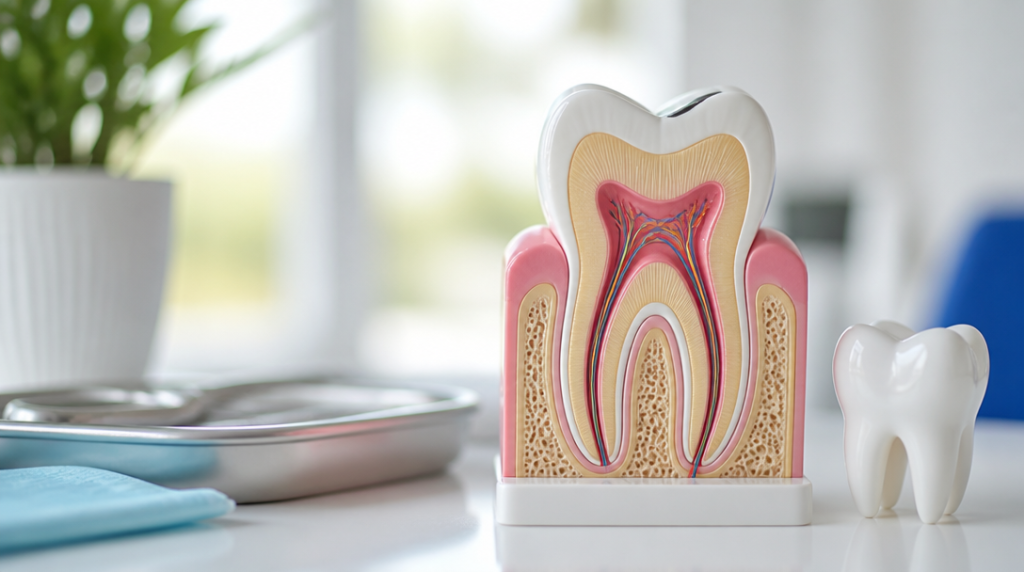
A child’s tooth is not a smaller version of an adult tooth. The enamel is thinner, the pulp chamber is proportionally larger, and the nerve sits closer to the surface. These biological realities mean that whitening ingredients behave differently in young mouths. What might cause mild, temporary sensitivity in a 30-year-old can trigger sharp, lingering … Read more
A child’s tooth is not a smaller version of an adult tooth. The enamel is thinner, the pulp chamber is proportionally larger, and the nerve sits closer to the surface. These biological realities mean that whitening ingredients behave differently in young mouths. What might cause mild, temporary sensitivity in a 30-year-old can trigger sharp, lingering pain in a 10-year-old—or alter developing enamel in ways that remain poorly studied.
The research on kids teeth whitening is thinner than most parents assume. No peer-reviewed study has declared bleaching unquestionably safe for all children. That gap matters. It means every decision carries uncertainty, and parents need a framework for navigating it—not just a reminder to “ask your dentist,” though you should, but an actual understanding of what is happening inside your child’s mouth at each developmental stage.
This article breaks down the developmental biology, separates safe approaches from harmful ones, and offers concrete age-based guidance grounded in what the clinical literature actually supports.

Why Children’s Teeth Respond Differently to Whitening
The difference starts at the structural level. Enamel thickness in primary teeth averages about 1 millimeter—roughly half the thickness of permanent enamel. That protective outer layer continues maturing for years after a tooth erupts. Research confirms that enamel permeability, mineral density, and surface hardness keep changing well into adolescence.
Whitening agents penetrate faster and deeper in young teeth. Hydrogen peroxide and carbamide peroxide work by passing through enamel into the underlying dentin, where they break apart stain molecules through oxidation. In a mature adult tooth with thick, fully mineralized enamel, this diffusion happens at a controlled rate. In a child’s tooth, the same concentration reaches the pulp more quickly. The pulp contains nerves and blood vessels. When peroxide contacts these tissues, the result is often sensitivity that goes well beyond the mild tingling adults report.
The American Academy of Pediatric Dentistry (AAPD) policy on dental bleaching for child and adolescent patients acknowledges tooth sensitivity as a common adverse effect of whitening procedures. Published estimates of post-whitening sensitivity vary, but rates of 30–50% are widely cited in adult populations. In children, with their thinner enamel and larger pulp chambers, the risk profile shifts unfavorably.
There is another complication: mixed dentition. Most children between ages 6 and 12 have a combination of primary and permanent teeth. These two tooth types whiten at different rates. Primary teeth have more opaque, less responsive enamel. Permanent teeth are more translucent and reactive to peroxide. Applying a uniform whitening treatment produces a patchy, mismatched smile—a result that can cause real social distress for a self-conscious child.
Parents are often frustrated by this unevenness and assume the product failed. In reality, the biology worked exactly as expected. The problem was applying an adult solution to a developing system.
The Enamel Maturity Timeline: Age 6 to 16
Understanding enamel development is essential for any parent considering kids teeth whitening. Maturation is not a single event but a years-long process with distinct phases.
Ages 6–8: Early mixed dentition. First permanent molars have erupted, and incisors are replacing baby teeth. The enamel on these new permanent teeth is immature—research suggests it takes two to four years after eruption for enamel to reach full mineralization. The surface is more porous, more acid-soluble, and more permeable to chemicals. This is the most vulnerable window for any whitening intervention.
Ages 9–11: Late mixed dentition. Canines and premolars are erupting. The early permanent incisors are approaching maturation, but newly erupting teeth restart the immaturity clock. The dentition remains functionally mixed, and enamel thickness varies dramatically across the arch.
Ages 12–14: Full permanent dentition, immature enamel. All permanent teeth except wisdom teeth have typically erupted. But eruption does not equal maturity. The enamel of a 12-year-old’s second molar, which erupted around age 12, is chemically younger than the enamel of that same child’s central incisors, which erupted around age 6 or 7. This staggered maturation means “permanent teeth” is not a uniform category.
Ages 14–16: Approaching full maturation. By this range, most enamel has achieved near-adult mineral density and thickness. The pulp chambers have receded to adult proportions. The risk profile begins approaching that of an adult—though it does not fully equalize until later.
The AAPD policy on dental bleaching (2016) recommends that bleaching for adolescents be considered on a case-by-case basis and notes the importance of waiting until enamel is adequately developed. Most pediatric dental authorities suggest that professional whitening treatments are best suited for patients aged 16 and older, when enamel has fully matured, and that unsupervised at-home whitening should be delayed until at least age 14 or 15 to reduce the risk of misuse and toxicity.
Parents often underestimate how long enamel takes to mature. A tooth that “looks finished” at age 10 is still biochemically incomplete. The visual assessment misleads.
Learn more about pediatric dental milestones and what to expect
Ingredients That Are Safe for Kids vs. Ones That Cause Harm
What is actually in whitening products, and how do those ingredients interact with developing teeth?
Hydrogen peroxide (H₂O₂) is the active agent in most professional and over-the-counter whiteners. It penetrates enamel and dentin, releasing free radicals that break down chromophores—the molecular structures that create stain color. The same reactivity that makes it effective makes it potentially damaging. High concentrations cause enamel softening, surface roughness, and demineralization. A 2007 study in Dental Materials demonstrated that 35% carbamide peroxide caused measurable in vitro demineralization of enamel. For children under 16, most pediatric dental guidelines advise against unsupervised use of peroxide-based whitening products.
Carbamide peroxide breaks down into hydrogen peroxide and urea. It acts more slowly, which some interpret as gentler, but the same active product still reaches the pulp. The concentration math matters: 10% carbamide peroxide yields roughly 3.5% hydrogen peroxide. Lower concentration does not automatically mean safe for children—it means the dose is reduced, but developing enamel remains more vulnerable than adult enamel to the same chemistry.
A note on regulation: In the United States, the FDA regulates tooth-whitening products based on their intended use and claims rather than on a single peroxide-concentration threshold. A product may be classified as a cosmetic or a drug depending on how it is marketed. By contrast, the European Union and United Kingdom impose specific hydrogen peroxide limits for tooth-whitening products under EU Cosmetics Regulation (EC) No 1223/2009, Annex III. Products above 0.1% hydrogen peroxide are restricted, and professional-use products up to 6% are not permitted for persons under 18. Parents should understand which regulatory framework applies in their jurisdiction.
Phthalimidoperoxycaproic acid (PAP) has appeared in newer formulations as a peroxide alternative. It oxidizes stains without releasing the same free radical cascade. A 2025 systematic review in Dentistry Journal examined hydrogen peroxide–free color correctors for tooth whitening in adolescents and young adults, reflecting growing interest in alternatives. However, the research base on PAP in pediatric populations remains too limited to declare it proven safe. Pediatric dental consultation before use in anyone under 16 is warranted.
Enzymatic systems (glucose oxidase, lactoperoxidase) and nano-hydroxyapatite represent a different approach entirely. These do not bleach stains but work through surface cleaning, pellicle modification, or remineralization. They are not whitening agents in the traditional sense. For young children with extrinsic staining from diet or poor hygiene, these offer a genuinely lower-risk path to a brighter appearance.
Abrasives in whitening toothpastes—silica, calcium carbonate, hydrated alumina—physically polish stains away. The risk here is cumulative enamel wear, not chemical penetration. For children, the RDA (relative dentin abrasivity) value matters more than the “whitening” claim on the box. Aim below 250 RDA; ideally below 150 for daily use in children.
What to avoid entirely: High-concentration peroxide strips or trays (anything above 10% carbamide peroxide equivalent), DIY methods involving acids (lemon juice, strawberries, activated charcoal scrubs), and any professional light-activated or laser whitening for children under 14. Heat and light accelerate peroxide breakdown, intensifying both effect and risk.
Intrinsic vs. Extrinsic Stains: Know the Difference First
Before considering any intervention, identify what you are actually treating. The cause of discoloration determines whether whitening is even appropriate.
Extrinsic stains sit on the enamel surface. Common culprits in children include chromogenic bacteria, iron supplements, dark-colored foods and beverages (berries, tea, cola), poor brushing technique, and certain mouthwashes. These respond to mechanical cleaning, improved hygiene, and sometimes mild abrasive or enzymatic pastes. They do not require bleaching agents.
Intrinsic stains originate inside the tooth structure—during enamel formation, from pulpal trauma, from certain medications (tetracycline, excessive fluoride), or from genetic conditions. These stains are embedded in the dentin or enamel matrix itself. Surface treatments cannot reach them. Traditional peroxide whitening has limited effectiveness against deep intrinsic discoloration and carries higher risk in young teeth.
The practical distinction: extrinsic stains often appear as generalized yellowing or brown patches that scale or polish away at the dentist. Intrinsic stains tend to be banded, mottled, or isolated to specific teeth that experienced trauma during development. A single dark tooth in an otherwise white arch strongly suggests intrinsic etiology—usually pulpal necrosis from a past injury.
Most parental concern about kids teeth whitening involves extrinsic staining that resolves with professional cleaning and habit changes. Whitening products are rarely the solution needed. Confirm the stain type with a pediatric dentist before pursuing any product.
When to see a pediatric dentist about tooth discoloration
Age-by-Age Guide: What Parents Can Safely Do at 6, 10, 13, and 15
What follows is a concrete framework based on enamel maturity, clinical guidance, and the risk profiles discussed above.
Age 6: Prevention Only
At this stage, children have primary teeth and newly erupting permanent incisors. Enamel is immature across the board. No whitening products of any kind are appropriate. Focus instead on twice-daily brushing with a pea-sized amount of fluoride toothpaste (1000 ppm), limiting acidic and pigmented beverages, and establishing dental visits every six months. Professional prophylaxis removes extrinsic stains effectively at this age. If staining is severe, investigate the underlying cause—iron supplementation, mouth breathing, or chromogenic bacteria—rather than masking the symptom.
Age 10: Hygiene Optimization and Professional Cleaning
Full mixed dentition. Enamel maturation varies dramatically by tooth. The patchy whitening risk is at its peak. Continue prevention strategies. Consider an electric toothbrush with a pressure sensor if brushing technique is poor. For persistent extrinsic staining, ask your pediatric dentist about professional polishing or a short course of prescription-strength fluoride to improve enamel resistance. No bleaching agents. The AAPD’s caution about whitening during mixed dentition applies fully here.
Age 13: Professional Evaluation of Specific Concerns
Permanent dentition is present, but enamel maturation is incomplete for recently erupted second molars and premolars. Social pressure for whiter teeth often intensifies at this age. The appropriate response is consultation, not a product purchase. A pediatric dentist can distinguish intrinsic from extrinsic causes, perform microabrasion for superficial enamel discoloration, apply professional polishing, and assess whether any further intervention is warranted. Some practitioners may consider supervised, low-concentration approaches for specific cases—this is the “case-by-case determination” the AAPD references—but that requires professional judgment, not parental experimentation.
Practical tips for maintaining oral health during adolescence
Age 15: Transition Toward Adult Protocols
By this age, most enamel has matured. The AAPD guidance suggests that delaying unsupervised at-home use until age 14 or 15 reduces risks associated with misuse. If a teen has fully erupted permanent dentition, good oral health, and significant aesthetic concerns, a pediatric or general dentist may approve supervised at-home whitening with custom-fitted trays and low-concentration carbamide peroxide (typically 10%). Even then, start with the lowest effective concentration, limit treatment duration, and discontinue immediately if sensitivity develops. Professional in-office whitening remains generally reserved for ages 16 and older.
The asymmetry in this timeline is intentional. Ages 6 through 13 are essentially “no bleaching” zones with rare, professionally supervised exceptions. Age 15 opens a narrow transition window. This reflects the biology.
When a Pediatric Dentist Should Step In Before Any Whitening
Certain situations demand professional evaluation before parents consider any whitening approach, even the mild options described above:
- A single discolored tooth — This often signals pulpal trauma or developmental disruption rather than a cosmetic issue. Whitening will not resolve it and may mask a condition requiring treatment.
- White spot lesions or chalky patches — These can indicate early demineralization or enamel hypoplasia. Applying peroxide-based products to already weakened enamel accelerates damage.
- Banding or striations across multiple teeth — This pattern suggests a systemic event during enamel formation, such as fluorosis, febrile illness, or medication exposure. The appropriate intervention is restorative, not cosmetic.
- Active cavities or untreated decay — Whitening agents in contact with exposed dentin or carious lesions cause significant pain and can worsen the underlying condition.
- Orthodontic appliances — Brackets, bands, and bonded retainers create uneven peroxide exposure, resulting in visible color discrepancies when hardware is removed.
- Persistent sensitivity to temperature or pressure — Pre-existing sensitivity suggests compromised enamel or pulpal inflammation. Adding a chemical irritant is contraindicated.
In each of these scenarios, a pediatric dentist can identify the root cause, recommend appropriate treatment, and determine whether any cosmetic intervention is safe to pursue after the underlying condition is addressed.
Practical Steps Parents Can Take Today
If your child’s smile concerns you, start with these steps rather than reaching for a whitening product:
- Schedule a professional cleaning. A dental hygienist can remove extrinsic staining that no toothpaste will touch. For many children, this single step resolves the issue entirely.
- Audit dietary habits. Reduce frequent exposure to tea, cola, sports drinks, and highly pigmented foods. Rinsing with water after consuming these helps limit surface staining.
- Improve brushing technique. Many children brush inadequately until their early teens. Supervised brushing with a soft-bristled or electric toothbrush and fluoride toothpaste addresses staining at its source.
- Ask about the stain type. At your child’s next dental visit, specifically ask whether the discoloration is extrinsic or intrinsic. This single question changes the entire treatment pathway.
- Wait. Enamel maturation is a biological process that cannot be rushed. In many cases, the most protective decision is to delay cosmetic whitening until the teeth are developmentally ready—typically age 16 or later for professional treatments.
References
- American Academy of Pediatric Dentistry. “Policy on the Use of Dental Bleaching for Child and Adolescent Patients.” Pediatric Dentistry, vol. 38, no. 6, 2016. PMID: 27931429. https://pubmed.ncbi.nlm.nih.gov/27931429/
- Tam, L.E., Kuo, V.Y., and Noroozi, A. “Thirty-five percent carbamide peroxide application causes in vitro demineralization of enamel.” Dental Materials, vol. 23, no. 6, 2007. DOI: 10.1016/j.dental.2006.06.032. https://doi.org/10.1016/j.dental.2006.06.032
- Monteiro, D. et al. “Hydrogen Peroxide-Free Color Correctors for Tooth Whitening in Adolescents and Young Adults: A Systematic Review of In Vitro and Clinical Evidence.” Dentistry Journal, 2025. PMID: 40863049. https://pubmed.ncbi.nlm.nih.gov/40863049/
- European Commission. “Regulation (EC) No 1223/2009 of the European Parliament and of the Council on cosmetic products.” Annex III, Entry 12 (Hydrogen Peroxide). https://eur-lex.europa.eu/legal-content/EN/TXT/?uri=CELEX%3A32009R1223
- Alencar, C.M. et al. “Enamel Surface Changes After Exposure to Bleaching Gels Containing Carbamide Peroxide or Hydrogen Peroxide.” Operative Dentistry, vol. 41, no. 4, 2016. DOI: 10.2341/15-010-L. https://doi.org/10.2341/15-010-L
- Costa, C.A.S. et al. “Response of human pulps to different in-office bleaching techniques: preliminary findings.” Brazilian Dental Journal, vol. 26, no. 3, 2015. PMID: 26200147. https://pubmed.ncbi.nlm.nih.gov/26200147/
Disclaimer
This article is for informational purposes only. LLRNCARE makes no representations or warranties about the completeness, accuracy, or reliability of the information. Any reliance is at your own risk.
For professional dental advice, consult a qualified dental professional.