
How Brewing Time Controls Tea and Coffee Stain Depth
What Happens in Your Cup During the First 60 Seconds of Brewing Photo by Hc Digital on Unsplash The moment hot water hits coffee grounds or tea leaves, a chemical race begins. Chromogens—pigment molecules that embed themselves in tooth enamel—don’t wait for your brew to finish. They start moving immediately. Research on tea extraction indicates … Read more
What Happens in Your Cup During the First 60 Seconds of Brewing

The moment hot water hits coffee grounds or tea leaves, a chemical race begins. Chromogens—pigment molecules that embed themselves in tooth enamel—don’t wait for your brew to finish. They start moving immediately.
Research on tea extraction indicates that a substantial share of water-soluble phenolics releases within the earliest phase of steeping. That first minute does more extraction work than most people realize. For coffee, brew time strongly affects how much caffeine and accompanying compounds enter your cup, with shorter brewing times yielding measurably less. The same mechanics that pull out caffeine also pull out the brown pigments that gradually dull your smile.
Here’s what this means practically. A quick espresso shot extracts under pressure for roughly 25–30 seconds. A French press steeps for about four minutes. A tea bag might sit for five. The difference in chromogen concentration across these methods isn’t slight—it’s substantial. And your enamel registers every second of it.
Water temperature accelerates extraction. Hotter water breaks down cell walls in tea leaves and coffee grounds faster, releasing more soluble compounds. But time is the multiplier. Thirty seconds of hot water extracts some chromogens. Four minutes extracts significantly more, and not in a linear fashion. The first minute is aggressive; subsequent minutes continue the work at a gradually slowing rate.
For stain-conscious drinkers, this first minute is a meaningful leverage point. Shorter contact between water and plant material means less pigment in the liquid that eventually passes over your teeth. Simple in concept, but tricky in practice when you also want full flavor.
Espresso vs. Pour-Over vs. French Press: Which Extraction Method Stains Most
Not all brewing methods treat your enamel equally. The extraction mechanics create fundamentally different chromogen profiles.
Espresso uses pressure, fine grind, and short time—typically 25–30 seconds. The pressure forces water through tightly packed grounds, extracting surface compounds rapidly. You get concentrated flavor, and the chromogen load per ounce is high, even though the volume is small. Most people don’t sip espresso slowly; they drink it quickly. Less contact time with teeth partially offsets the concentration.
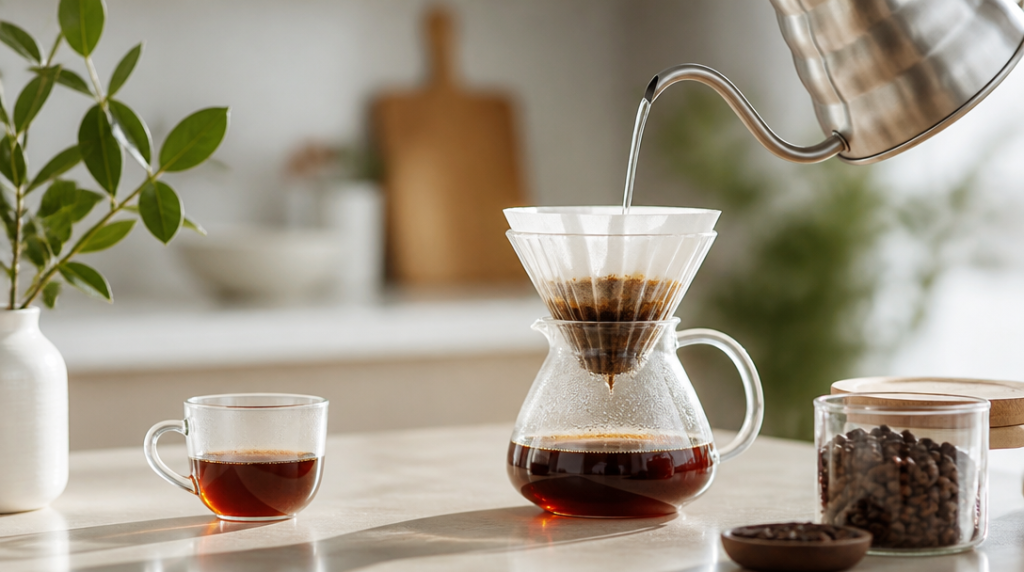
Pour-over methods use medium grind and controlled pouring over two to three minutes. Gravity, not pressure, does the work. The slower extraction pulls a broad range of compounds into a larger cup. You drink more volume, more slowly. That means more chromogen exposure across more minutes of tooth contact.
French press is the method that should concern stain-conscious drinkers most. Coarse grind, full immersion, four minutes minimum. The grounds sit in contact with water the entire time, continuing to release compounds without interruption. No paper filter removes oils or fine particles. The resulting brew contains more of everything—including pigments that stain. Clinically, French press drinkers often report faster visible staining than those using filtered methods. The mechanism is right there in the brewing physics: unfiltered immersion maximizes both chromogen extraction and particulate carryover.
The practical adjustment? If you won’t give up French press, consider shortening steep time to three minutes instead of four. Taste the difference; many people barely notice. Your enamel will.
Why a Longer Tea Steep Stains More Deeply Than a Short One
Tea carries a particular risk for deep staining. A 2026 study published in Odontology assessed the staining potential of common beverages on enamel surfaces, and research using microspectrophotometry has found that tea stains can penetrate enamel more deeply than red wine stains—a finding that surprises most people, since red wine is widely assumed to be the worst offender. Separate work has confirmed that black tea ranks among the beverages with the highest staining potential on dental enamel.
Brewing duration research helps explain why. Studies on tea infusion suggest that around five minutes of steeping is sufficient to maximize the bioaccessibility of caffeine and phenolic compounds; longer brewing doesn’t meaningfully increase these levels and may actually reduce some of them. For loose-leaf tea, roughly ten minutes of steeping can extract more than half of total phenolics. For tea bags, the finer particle size accelerates extraction so that just two to three minutes achieves comparable levels.
So a three-minute steep versus a one-minute steep doesn’t simply triple the chromogen load. You get a disproportionately deeper, more concentrated extraction—one that interacts more aggressively with enamel. The penetration data on tea staining starts making sense when connected to standard brewing habits.
Green tea drinkers shouldn’t feel exempt. Lower oxidation means a lighter starting pigment, but the same extraction mechanics apply. White tea is less processed, yet it still releases staining compounds. Herbal teas vary widely by plant—rooibos stains noticeably, while chamomile produces far less discoloration.
One detail most people overlook: the second steep. Reusing tea leaves or bags for a second cup extracts remaining compounds at lower intensity. That second cup is genuinely gentler on your teeth—not zero risk, but reduced. Tea traditions that emphasize multiple infusions were onto something beyond flavor.
Cold Brew’s Staining Advantage Most People Overlook
Cold brew isn’t just a summer trend or a smoother taste profile. It’s a legitimate stain-reduction strategy that deserves more attention.
Cold brewing uses room-temperature or cold water, coarse grind, and extended time—typically 12 to 24 hours. Without heat, the chemical kinetics change fundamentally. Certain compounds extract readily at low temperatures; others barely extract at all. Acidic oils and some harsh phenolics that heat aggressively pulls from grounds tend to stay behind during cold extraction. The result is a smoother, less bitter cup with a different chromogen profile—one that includes less of the specific pigments that bind aggressively to enamel.
Research on extraction variables in cold versus hot brew coffee suggests that the total phenolic content and compound ratios differ meaningfully between the two methods, though exact comparisons vary by grind size, ratio, and duration. The key point: cold brew’s chemistry isn’t simply “hot coffee that cooled down.” It’s a different beverage with different staining implications.
There is a catch, though: concentration. Many cold brew preparations use higher coffee-to-water ratios, then get diluted for serving. A concentrated cold brew shot still contains plenty of chromogens. But most people drink cold brew diluted, over ice, often with milk. Each of those factors reduces enamel exposure compared to sipping hot black coffee for twenty minutes.
Ready-to-drink cold brew from bottles? Check labels. Some are highly concentrated; others come pre-diluted. The stain impact depends heavily on whether you’re drinking concentrate or a ready-to-drink version.
If you’re serious about reducing stains without quitting coffee, switching your afternoon cup to cold brew is one of the more effective single changes you can make. Morning hot coffee for the ritual; afternoon cold brew for the reduced exposure. For more on how daily oral care habits interact with dietary choices, start with the basics.
How Brewing Temperature and Chromogen Release Work Together
Temperature and time aren’t independent variables in extraction. They interact, and the interaction matters for your teeth.
Hot water increases the kinetic energy of extraction. Molecules move faster; cell structures break down more readily. At around 200°F (93°C), coffee ground extraction is aggressive and rapid. At 170°F (77°C), the same grind and time yield noticeably different compound profiles. Tea shows similar patterns—black tea brewed at a rolling boil versus just off the boil extracts differently in both flavor and pigment load.
For stain control, the important nuance is that lower temperature with longer time doesn’t simply replicate hot extraction. The compound profile shifts. Some chromogens extract preferentially with heat; others release regardless of temperature. This means temperature is a genuine variable you can manipulate.
For coffee, try brewing at slightly lower temperatures if your equipment allows. Many pour-over kettles now offer precise temperature control. Dropping from 205°F to 195°F with a slightly longer pour can maintain flavor complexity while modestly reducing aggressive pigment extraction. The difference in stain potential is real, though not dramatic.
For tea, the guidance is clearer. Green tea should never meet boiling water—it turns bitter and extracts harshly at high temperatures. The traditional 160–180°F (71–82°C) range for green tea also happens to be gentler on enamel. Black tea handles near-boiling well, but letting water cool for thirty seconds before pouring reduces extraction intensity without ruining the cup. Oolong sits in the middle, around 185–195°F (85–91°C).
Most people use water that’s too hot for what they’re brewing. Boiling water poured straight onto delicate green tea extracts maximum everything—including staining compounds. A simple thermometer or temperature-controlled kettle is a worthwhile investment for both flavor and keeping your teeth looking their best.
The Post-Sip Window: Why the First 10 Minutes Decide Stain Permanence
What happens after swallowing matters as much as what you brewed. This is where most stain-prevention advice fails—too vague, too late.
Chromogens don’t instantly bond to enamel. There’s a window where they sit on the surface, not yet locked in. The acidity of coffee and tea temporarily softens enamel’s outermost layer, making it more porous and more receptive to pigment embedding. This softened state persists for roughly 20 to 30 minutes after exposure. During this window, chromogens can penetrate more deeply than they could into fully remineralized enamel.
The first 10 minutes are critical. Brushing immediately after acidic drinks sounds logical but risks abrading softened enamel. The better approach: rinse with plain water right after finishing, then wait at least 30 minutes before brushing. The rinse dilutes and displaces surface chromogens before they settle. The delay lets saliva remineralize enamel before you apply mechanical force.
Some people find drinking through straws helpful. The physics check out—liquid bypasses the front teeth. But most coffee and tea drinking involves sipping, tasting, and unconscious swishing. Straws help; they’re not a complete solution. Positioning the straw toward the back of the mouth reduces anterior tooth exposure more than holding it at the lips.
Milk and creamers change the equation modestly. Casein and other milk proteins can bind some chromogens, reducing the free pigment available to stain enamel. This isn’t a reason to load up on sugary creamers, but plain milk or unsweetened alternatives do offer mild protection. The effect is consistent across studies, though modest in magnitude.
What about “stain eraser” wipes and post-coffee whitening products? The evidence is mixed. Physical wiping removes some surface pigment; chemical claims in these products are often overstated. A clean, damp cloth or a thorough water rinse does much of the same work. For more on what actually works for maintaining tooth color, see our dental health guides.
The sequence that actually works: finish your drink, rinse thoroughly with water, wait half an hour, then brush normally.
A Drink-by-Drink Brewing Adjustment Guide for Lighter Stains
Specific adjustments you can make tomorrow matter more than general principles. Here’s how to modify your actual brewing habits based on what you drink.
Black Coffee
If you use a drip machine, check whether you can control brew temperature. Many machines don’t allow it. What you can control: grind size and basket contact time. A slightly coarser grind with the same water volume reduces extraction intensity. Don’t go too coarse—you’ll get weak, sour coffee. Small adjustments yield meaningful differences over weeks and months of daily drinking.
French press users: try steeping for four minutes, then breaking the crust, scooping off floating grounds, and waiting an additional five to eight minutes for sediment to settle before plunging gently and pouring. The extended settling reduces fine particles in your cup—fewer suspended chromogens, cleaner flavor. It’s a technique popularized by specialty coffee professionals and happens to be better for staining, too.
Espresso: you’re already working with short extraction times. The risk is volume—multiple shots multiply exposure. Consider an Americano with one shot and more water rather than a triple espresso.
Black Tea
Brewing time teeth stains are most controllable with tea. Research suggests five minutes is sufficient to maximize phenolic compound extraction, and going longer doesn’t help. But for stain reduction, even five minutes is more than many palates need. Try steeping for two and a half to three minutes. Taste the result. Many people prefer the lighter, less tannic cup, and the reduced chromogen exposure is a meaningful bonus given the evidence on tea’s deep enamel penetration.
Loose leaf versus bags: bags extract faster due to their finer cut. A two-minute bag steep approximates roughly three to four minutes of loose-leaf steeping. Adjust your timing accordingly. Second infusions of the same leaves carry a genuinely lighter chromogen load.
Green and White Tea
These teas already carry lower staining risk, but brewing temperature is your main control variable. Never use boiling water. Use a variable-temperature kettle, or let boiling water sit for two to three minutes before pouring. The flavor improvement alone justifies this; the stain reduction is an added benefit.
Herbal and Roasted Grain Teas
Rooibos stains despite being classified as an herbal tea—its red pigments bind to enamel readily. Chamomile and peppermint generally produce minimal staining. Hojicha (roasted Japanese green tea) extracts lighter than standard green tea despite its darker appearance, because the roasting process alters the phenolic profile. Grain-based teas like barley tea tend to produce less enamel staining than true teas derived from Camellia sinensis.
For any herbal tea, the same brewing time principles apply: shorter steeps and lower temperatures extract fewer pigments. If you’re choosing an evening beverage with staining in mind, chamomile or peppermint at moderate temperature for two to three minutes is among the gentlest options available.
References
- Assessing the staining potential of common sauces on tooth enamel surface. Odontology, 2026 Jan. PMID: 40410555. https://pubmed.ncbi.nlm.nih.gov/40410555/
- The Impact on Dental Staining Caused by Beverages in Combination with Chlorhexidine Digluconate. European Journal of Dentistry, 2022 Oct. PMID: 35196724. https://pubmed.ncbi.nlm.nih.gov/35196724/
- Milk Reduces Enamel Staining Caused by Black Tea and Chlorhexidine Mouthwash. Beverages, 2022. DOI: 10.3390/beverages8030040. https://doi.org/10.3390/beverages8030040
- Variables Affecting the Extraction of Antioxidants in Cold and Hot Brew Coffee: A Review. Antioxidants, 2023 Dec. PMID: 38247454. https://pubmed.ncbi.nlm.nih.gov/38247454/
- Brew temperature, at fixed brew strength and extraction, has little impact on the sensory profile of drip brew coffee. Scientific Reports, 2020. DOI: 10.1038/s41598-020-73341-4. https://doi.org/10.1038/s41598-020-73341-4
- Caffeine content in filter coffee brews as a function of degree of roast and extraction yield. Scientific Reports, 2024 Nov. PMID: 39582028. https://pubmed.ncbi.nlm.nih.gov/39582028/
Disclaimer
This article is for informational purposes only. LLRNCARE makes no representations or warranties about the completeness, accuracy, or reliability of the information. Any reliance is at your own risk.
For professional dental advice, consult a qualified dental professional.