
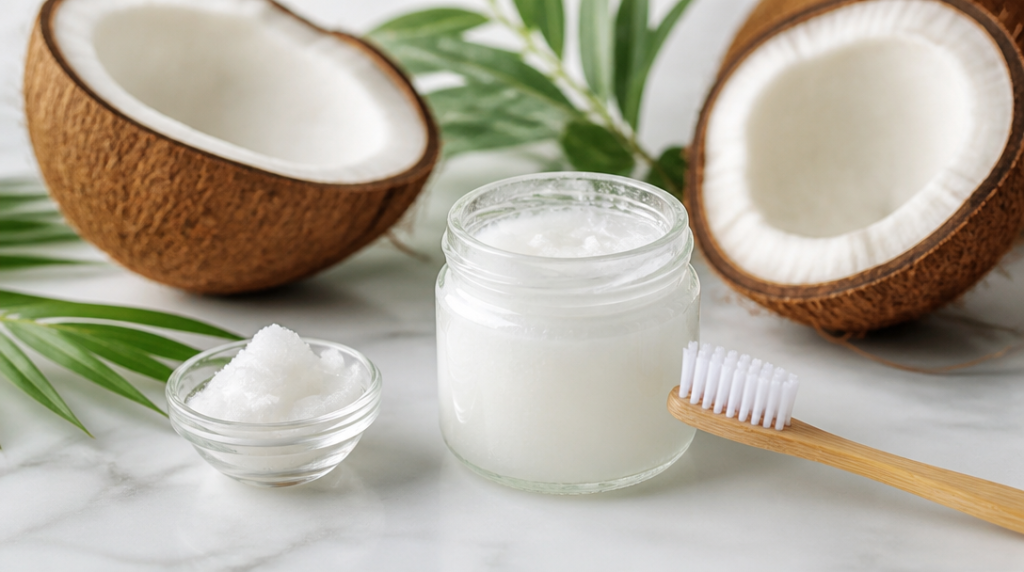
How Oil Pulling Science Validates Ancient Oral Care for Modern Buyers
Oil Pulling Oral Care: What Clinical Science Actually Proves Oil pulling oral care sits at a rare intersection where a 3,000-year-old Ayurvedic practice holds up — at least partially — under controlled clinical scrutiny. Most ancient wellness rituals wither when randomized trials arrive. Oil pulling has not entirely withered, but the evidence picture is more … Read more
Oil Pulling Oral Care: What Clinical Science Actually Proves
Oil pulling oral care sits at a rare intersection where a 3,000-year-old Ayurvedic practice holds up — at least partially — under controlled clinical scrutiny. Most ancient wellness rituals wither when randomized trials arrive. Oil pulling has not entirely withered, but the evidence picture is more nuanced than either enthusiasts or skeptics typically acknowledge.
The research base now spans multiple meta-analyses, a Cochrane systematic review, and dozens of randomized controlled trials. What emerges is a practice with a credible antimicrobial mechanism, modest but measurable clinical outcomes, and a clear role as an adjunct rather than a replacement for conventional oral hygiene. For product developers, formulators, and oral care brands, that distinction matters enormously when positioning and labeling products.
The Antimicrobial Mechanism: How Oil Pulling Oral Care Actually Works
The core antimicrobial action operates through saponification — oils emulsify bacterial cell membranes and lipid bilayers during the swishing process. Medium-chain fatty acids, especially lauric acid found at roughly 47% concentration in coconut oil, convert to monolaurin under oral conditions and demonstrate bacteriostatic activity against Streptococcus mutans and Lactobacillus species.
A 2022 meta-analysis examining nine randomized controlled trials confirmed that oil pulling significantly reduced salivary bacterial counts compared to control groups. That same analysis found no statistically significant improvement in plaque or gingival index scores — a distinction that shapes every legitimate product claim downstream.
The swishing action itself contributes mechanical disruption of loosely adherent bacterial biofilms. This dual pathway — biochemical membrane disruption combined with physical shear forces — explains why salivary CFU reductions appear consistently in the literature even when plaque index improvements do not reach significance.
Bacterial Count Reduction: The Strongest Signal in the Data
Salivary bacterial counts represent the most reproducible outcome across oil pulling studies. Colony-forming unit measurements in saliva samples show reductions in the range of 106 to 104 CFUs/mL after approximately 14 days of regular practice. This magnitude of reduction is clinically meaningful in the context of systemic bacterial load entering the oral cavity, even if its direct translation to plaque scores remains contested.
A systematic review focused specifically on coconut oil pulling analyzed four RCTs involving 182 participants and reported reductions in both salivary bacterial counts and plaque index. The researchers explicitly noted high risk of bias across the included studies — a caveat that responsible consumer education and product marketing must reflect rather than obscure.
Evidence Hierarchy: Where the Research Is Strong and Where It Is Not
A Cochrane review — the highest tier of systematic evidence synthesis — found probable benefit for gingival health from oil pulling, while classifying the overall evidence certainty as very low. Chlorhexidine mouthwash outperformed oil pulling on plaque reduction in direct comparisons. That finding does not disqualify oil pulling as useful; it calibrates where it fits in the oral care hierarchy.
Gingivitis and periodontal markers show measurable but modest improvements. Clinical studies report mean gingival index reductions from approximately 1.85 to 1.31 over 45 days of coconut oil pulling. Bleeding on probing percentages decrease by 15–25 percentage points across multiple trials, though these improvements typically plateau around weeks four through six.
Inflammatory biomarkers tell a complementary story. Studies measuring interleukin-1β in gingival crevicular fluid report reductions from baseline values near 145 pg/mL to approximately 89 pg/mL after 30 days of practice. Matrix metalloproteinase-8 activity — a marker of collagen breakdown in periodontal tissue — decreases by 18–23% in oil pulling groups versus controls. These biochemical signals support an anti-inflammatory mechanism, while the magnitude remains insufficient for treating established periodontitis without conventional therapy.
The Biofilm Disruption Question
Oral biofilm disruption is more complex than salivary bacterial count reduction alone. The lipophilic nature of oils allows penetration through hydrophobic regions of mature biofilms that water-based solutions cannot efficiently reach. Scanning electron microscopy studies show oil-treated biofilms with disrupted architecture, decreased bacterial density, and altered extracellular polymeric substance distribution.
These structural changes reportedly persist for two to four hours post-treatment, suggesting some sustained effect beyond the pulling session itself. The challenge for researchers is translating these microscopic observations into reliable plaque index improvements at the clinical level — a gap the current literature has not yet closed convincingly. For a deeper look at how biofilm disruption relates to broader oral health science and preventive care strategies, the mechanistic evidence behind oil pulling fits within a larger pattern of adjunctive therapies showing localized but not systemic benefits.
Coconut vs. Sesame vs. Sunflower: Comparative Clinical Profiles
Not all oils perform identically, and the clinical literature reflects meaningful differences in both mechanism and outcome. Coconut oil’s lauric acid content drives its antimicrobial advantage, with studies reporting S. mutans count reductions of 85–92% after 14 days compared to 67–74% for sesame oil and 45–58% for sunflower oil. These figures come from studies with noted methodological limitations, but the directional pattern across trials is consistent.
Sesame oil holds the longest documented history in Ayurvedic kavala and gandusha practice. It contains sesamin and sesamolin compounds with anti-inflammatory properties. Clinical trials comparing sesame oil directly to chlorhexidine found comparable reductions in gingival inflammation scores — approximately 1.2 versus 1.1 on the Löe-Silness index — while chlorhexidine maintained superior plaque control. That near-equivalence on gingival inflammation, despite inferior plaque performance, points to an anti-inflammatory pathway somewhat independent of mechanical plaque removal.
Sunflower oil demonstrates more modest antimicrobial effects, attributable primarily to oleic acid content and vitamin E. Its lower viscosity at body temperature — roughly 8–12 centipoise compared to 15–25 centipoise for coconut oil — may reduce effective contact time with oral tissues and requires longer swishing durations to achieve comparable bacterial reduction. For product formulators, coconut oil’s viscosity profile at 37°C is a practical advantage for ensuring consistent oral distribution.

B2B Formulation Considerations for Oil Pulling Oral Care Products
Developing a commercial oil pulling oral care product requires solving stability, palatability, and efficacy standardization challenges that standard aqueous mouthwash development does not encounter. Oxidative stability tops the list: coconut oil typically supports a shelf life of 24–36 months under appropriate storage conditions, while sesame oil runs 12–18 months before rancidity becomes a quality concern. Packaging in UV-protective, high-density polyethylene containers with aluminum foil induction seals extends stability by 40–60% compared to standard plastic.
Viscosity modification through controlled fractionation gives formulators meaningful leverage. Fractionated coconut oil with a defined melting point range of 23–25°C maintains consistent mouthfeel across ambient temperature variation while preserving the medium-chain triglyceride profile responsible for antimicrobial activity. This technical differentiation can support both a premium sensory experience and a defensible efficacy claim grounded in the literature.
Flavor integration presents a specific technical challenge. Traditional mint oils can destabilize lipid-based formulations when introduced at standard aqueous concentrations. Successful commercial formulations use encapsulated flavoring systems or oil-soluble flavor compounds — spearmint terpenes at 0.1–0.3% w/w represent a workable range. Quality control protocols should standardize pulling duration (10 ± 2 minutes), temperature simulation (37°C), and bacterial reduction endpoints using validated oral bacterial cultures to ensure batch-to-batch efficacy consistency. Brands developing natural oral care lines can find additional context in our overview of natural oral care ingredients and their evidence base.
Regulatory Positioning Across Global Markets
Oil pulling products currently navigate regulatory frameworks as cosmetic preparations rather than therapeutic drugs in most major markets. In the United States, the FDA classifies oil pulling products under 21 CFR Part 701 cosmetic regulations when marketed for cleansing or aesthetic purposes. No FDA endorsement of oil pulling as a therapeutic treatment exists — and no product should claim one. Structuring claims around “cleansing,” “freshening,” or supporting an “oral hygiene routine” keeps products squarely within cosmetic territory and avoids drug classification triggers that would require clinical trial substantiation at pharmaceutical standards.
The European Union’s Cosmetics Regulation (EC) No 1223/2009 applies similarly strict prohibitions on therapeutic language. Claims must avoid terms like “treats” or “prevents” in relation to disease conditions. Health Canada’s Natural and Non-prescription Health Products Directorate allows oil pulling products under Natural Product Number licensing when traditional use documentation spans at least 50 years — a threshold Ayurvedic practice clears with centuries to spare.
Australia’s Therapeutic Goods Administration requires listed medicine status for any therapeutic claims, while India’s Central Drugs Standard Control Organization provides dedicated pathways under AYUSH ministry guidelines recognizing Ayurvedic practice. Acceptable global claim language includes “supports oral hygiene routine,” “traditional Ayurvedic oral care practice,” and “helps maintain fresh breath.” Prohibited territory includes disease treatment assertions and performance comparisons to pharmaceutical antimicrobials without drug-standard clinical substantiation.
Consumer Education: Translating Clinical Evidence Into Product Messaging
Responsible consumer education for oil pulling oral care requires two simultaneous moves: communicating genuine, research-supported benefits clearly, and actively correcting the detoxification mythology that dominates social media coverage. Market research consistently shows the majority of consumers associate oil pulling with systemic toxin removal — a claim without credible scientific support that exposes brands to regulatory and reputational risk.
Positioning oil pulling as an adjunctive practice is both scientifically accurate and commercially sound. Clinical studies confirm enhanced outcomes when oil pulling combines with standard brushing and flossing versus either approach in isolation. That framing — “enhances your existing routine” rather than “replaces it” — aligns with the evidence, avoids safety concerns about patients abandoning proven dental care, and resonates with the wellness-oriented consumer seeking to optimize rather than overhaul their daily habits.
Practical technique guidance improves compliance and outcome. Optimal protocols specify 1–2 teaspoons of oil, a swishing duration of 10–15 minutes at low-to-moderate intensity, and disposal in waste containers rather than sinks to prevent drain blockages from solidified oil. Bacterial count reductions appear within 7–14 days; subjective breath improvements often register sooner. Consumer satisfaction increases substantially when brands communicate that maximum measurable benefits typically develop over four to six weeks of consistent daily use.
Professional Channel Strategy
Dental hygienists and integrative health practitioners represent the most credible professional advocacy channel for oil pulling products. These practitioners already field patient questions about oil pulling and benefit from access to balanced, evidence-grounded educational materials. Continuing education programs that present the actual research — including its limitations — build more durable credibility than marketing materials that overstate efficacy.
Claiming “dentist recommended” language without specific, current survey data invites regulatory scrutiny and professional backlash. A more defensible approach frames the professional relationship as educational: brands that help clinicians counsel patients accurately on where oil pulling oral care fits within a complete preventive protocol earn long-term channel trust. Product developers should also explore how oral care product development frameworks can integrate adjunctive therapies into full-line brand strategies.
The Honest Bottom Line for Buyers and Brands
The science validates oil pulling as a legitimate adjunct for reducing oral bacterial load, with credible but modest anti-inflammatory effects on gingival tissue. It does not replace toothbrushing, flossing, or professional periodontal treatment. Chlorhexidine remains the clinical benchmark for plaque reduction, and the Cochrane evidence certainty rating of “very low” appropriately signals that more rigorous, higher-powered trials are still needed.
For buyers evaluating oil pulling oral care products, coconut oil formulations currently carry the strongest evidence base. For brands developing and marketing these products, the opportunity lies in honest positioning: a 3,000-year-old practice that modern science has partially validated, correctly positioned as an enhancement to — not a replacement for — conventional oral hygiene. That story, told accurately, is compelling enough without embellishment.
References
- Cochrane Review: Oil pulling for oral health — probable gingival benefit, very low certainty evidence. PubMed, 2023.
- Effectiveness of Oil Pulling for Improving Oral Health: A Meta-Analysis. PMC, 2022.
- Meta-analysis of 9 RCTs on oil pulling: salivary bacterial reduction, no significant plaque/gingival index benefit. PubMed, 2022.
- The effect of oil pulling with coconut oil to improve dental hygiene and oral health: systematic review of 4 RCTs. PMC, 2020.
- Oil pulling and importance of traditional medicine in oral health. PMC, 2017.
- Comparative Evaluation of Antiplaque Efficacy of Coconut Oil Pulling. PMC, 2017.
Disclaimer
This article is for informational purposes only. LLRNCARE makes no representations or warranties about the completeness, accuracy, reliability of the information. Any reliance is at your own risk.
For professional dental advice, consult a qualified dental professional. For regulatory compliance, consult legal experts.
—