
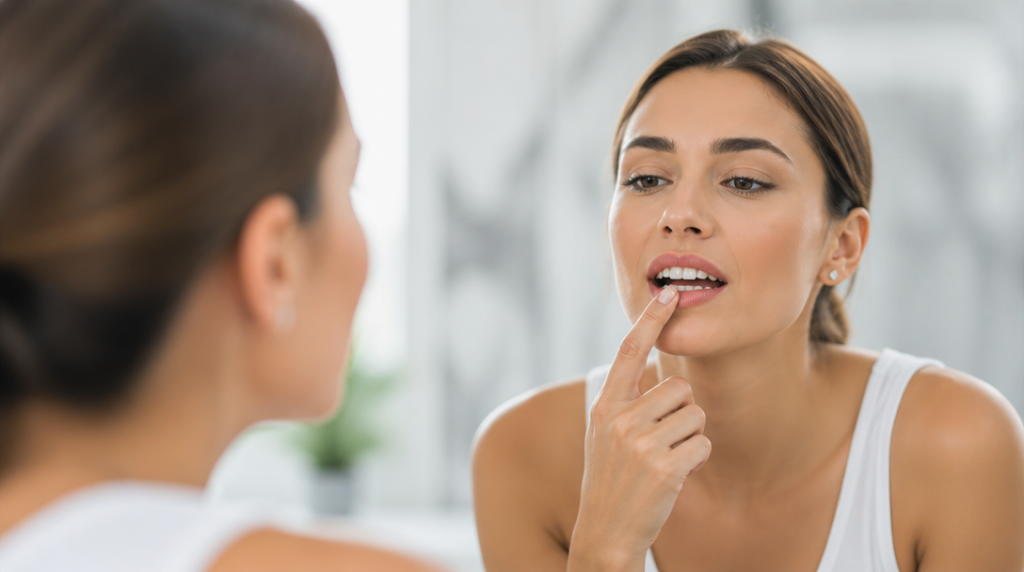
Why Hormones Change Your Teeth Color in 2026
Your hormones are not secretly dyeing your teeth from the inside out. That is not how enamel works. But if you have noticed your teeth looking darker during pregnancy, yellower through menopause, or just plain stubborn when you try to whiten them as a teenager, you are not imagining it. Hormones create conditions that make … Read more
Your hormones are not secretly dyeing your teeth from the inside out. That is not how enamel works. But if you have noticed your teeth looking darker during pregnancy, yellower through menopause, or just plain stubborn when you try to whiten them as a teenager, you are not imagining it. Hormones create conditions that make teeth appear to change color and, critically, they change how your teeth respond to whitening treatments. The biological mechanism is indirect. The frustration is very real.
The hormone angle is the one almost every whitening guide skips. They tell you to avoid coffee and red wine. They sell you strips. They do not explain why the same peroxide concentration works brilliantly in March and barely touches your stains in August. This article fills that gap with what actually happens inside your mouth when estrogen, progesterone, thyroid hormones, and growth hormones shift.

How Estrogen and Progesterone Shift Blood Flow Inside Your Teeth
Estrogen and progesterone do not penetrate enamel. They cannot. Enamel is the hardest tissue in the human body and is essentially non-porous to circulating hormones. What these hormones do affect is blood flow to periodontal tissues — the gums and ligaments that surround and support your teeth. Research dating back to the early 1970s demonstrated that elevated estrogen and progesterone increase vascularization in soft tissue, making gums more permeable to bacterial toxins and more prone to inflammation.
This matters for perceived tooth color because inflamed gums bleed more easily. Blood breakdown products can stain both gum tissue and the tooth surface near the gumline. The result is not a uniform yellowing but a darker, sometimes reddish-brown band at the cervical region of the tooth. It looks like dietary staining. It behaves like staining. But the source is hormonal inflammation, not your morning coffee.
During the luteal phase of the menstrual cycle, when progesterone peaks, many women experience increased gum sensitivity and bleeding. The same peroxide gel that felt fine two weeks ago now stings. This is not psychological. The gum tissue barrier is compromised, and the whitening agent can irritate soft tissue rather than targeting the enamel surface effectively. The whitening result tends to be patchy at best, uncomfortable at worst.
What to do about it: If you track your cycle, consider scheduling professional whitening or starting at-home tray treatments during the follicular phase, roughly days 7 through 14 of a 28-day cycle, when estrogen is rising and progesterone remains relatively low. Your gums will typically be less reactive, and you may get more uniform results. This approach has not been formally studied in whitening-specific clinical trials, but dentists have long recognized that gum sensitivity fluctuates with hormonal cycles, and timing elective procedures around those fluctuations is reasonable.
Why Pregnancy Makes Teeth Look Yellow Even With Thorough Hygiene
The old saying claims you lose a tooth for every baby. Medical consensus does not support that claim — pregnancy does not directly cause tooth loss. What pregnancy does create is a combination of hormonal conditions that conspire to darken your smile, and brushing twice daily does not fully protect against all of them.
During pregnancy, estradiol and progesterone surge to levels many times higher than baseline. Research has linked elevated salivary steroid hormones during pregnancy with increased levels of cariogenic bacteria, including Streptococcus mutans. Higher bacterial loads produce more acids that demineralize enamel, potentially creating white spot lesions that can progress to brown or darker decay. The tooth itself has not changed its intrinsic shade; the enamel surface is structurally altered in ways that scatter light differently and reveal the yellower dentin beneath.
Dry mouth during pregnancy compounds the problem. While pregnancy involves high circulating estrogen overall, hormonal fluctuations, nausea, dehydration, and changes in breathing patterns can all reduce effective salivary flow. Saliva is your natural buffering system. Without adequate flow, acids linger, stains adhere more stubbornly, and oral pH drops into the range that promotes demineralization. You could be brushing diligently and still develop the conditions for discoloration because your defensive chemistry has changed.
Pregnancy gingivitis deserves attention here. The condition affects roughly 60 to 75 percent of pregnant women to some degree. Gums swell, bleed, and create pockets where plaque accumulates. That plaque stains. The bleeding itself stains. And whitening becomes problematic: many product labels advise pregnant or breastfeeding users to consult a dentist or healthcare professional before use. Some dentists recommend postponing whitening altogether because already-inflamed gums tolerate peroxide poorly, and there is limited pregnancy-specific safety data for these products. Your whitening options narrow precisely when you most want them.
Practical guidance: Focus on prevention. Talk to your dentist about higher-fluoride toothpaste options appropriate for your situation. Consider a saliva substitute if you notice persistent dryness. Professional cleanings may be warranted more frequently during pregnancy to manage the plaque that hormones help accumulate — discuss the right schedule with your dental provider. Save the whitening for postpartum, and even then, wait until your gums have normalized, typically a few months after delivery or after you finish breastfeeding.
What Menopause Does to Enamel and Whitening Results
Menopause is where the hormones-and-teeth-color connection gets genuinely interesting — and genuinely misunderstood. The popular narrative says menopause thins enamel and makes teeth darker. The actual mechanism is more specific and more actionable.
Estrogen decline during menopause contributes to xerostomia and increased caries susceptibility, a connection supported by research including a 2012 study in Gynecological Endocrinology that linked salivary 17β-estradiol levels to dry mouth symptoms in menopausal women. Without adequate saliva, remineralization slows. Without estrogen’s protective effects on oral mucosa, gums may recede, exposing root surfaces. Root cementum is softer and more porous than enamel; it picks up stains more readily and responds to whitening less predictably. The apparent darkening is often not enamel color change at all but a combination of exposed root surfaces and accumulated stain on those surfaces.
The bone loss connection gets misreported constantly. Menopause-related bone loss affects alveolar bone, the jawbone that holds teeth in place. It does not change tooth color directly. But as teeth lose supporting bone, they can shift slightly, creating new contact points and gaps where plaque accumulates. The staining pattern changes: teeth look darker in the spaces between them where you never used to have problems. Over-the-counter whitening strips, designed for flat front surfaces, miss these areas entirely.
Whitening responsiveness changes too. Peroxide gels work best on enamel with intact surface structure. Enamel that has been subjected to years of acid exposure from reduced salivary buffering often has an altered surface texture. The gel penetrates unevenly. Some areas whiten dramatically while others barely respond. The result can be a mottled, patchy appearance that looks worse than the original shade.
What works better at this life stage: Custom-fitted trays from your dentist, not generic strips. Trays seal the gel against the tooth surface, compensating for textural irregularities. Lower-concentration gels used for longer durations may reduce the risk of over-bleaching porous areas, though your dentist should determine the specific concentration and wear time for your situation. And critically, address the xerostomia. Products like Biotene, sugar-free xylitol gum, and staying well hydrated can help restore some of your mouth’s defensive capacity. Without adequate saliva, whitening results tend to be short-lived.
Whitening protocols for sensitive teeth and aging enamel look very different from what worked in your twenties. The active ingredients may be identical; the application strategy changes entirely.
How Thyroid Imbalances Affect Tooth Color
Thyroid hormones regulate metabolism broadly, and your oral environment is not exempt from their influence. The connection to tooth color is mostly indirect, but clinically it matters — and thyroid dysfunction is one of the few hormonal conditions where developmental tooth discoloration can genuinely originate from within.
Hypothyroidism slows salivary flow and oral epithelial turnover. The result is chronic dry mouth and tissue changes that make surfaces more retentive for stains. Hyperthyroidism, conversely, can accelerate bone turnover including in the jaw, potentially leading to tooth mobility and the same plaque-accumulation problems seen with menopausal bone loss.
The developmental angle is distinct. Thyroid dysfunction during childhood, before permanent teeth have fully formed, can disrupt enamel matrix formation. The resulting developmental enamel defects create intrinsic discoloration — color that is structural, not superficial, and that conventional peroxide whitening cannot fully correct. Adult-onset thyroid disease does not alter the color of already-formed enamel, but it changes the oral conditions that make teeth appear darker over time.
The medication factor matters here as well. Thyroid hormone replacement itself does not discolor teeth. But thyroid patients frequently take multiple medications, and polypharmacy increases the cumulative risk of drug-induced dry mouth. Comorbid autoimmune conditions may require additional medications that affect oral tissues. The thyroid condition is the starting point; the oral consequences branch out through several channels.
If you have thyroid disease and want to whiten, start with a full periodontal assessment. Mobile teeth, receding gums, or active periodontal disease need to be stabilized first. Using a desensitizing toothpaste for two weeks before starting any peroxide treatment can help, since thyroid-related dry mouth often correlates with dentin hypersensitivity. Professional in-office whitening, where a dentist can isolate individual teeth and adjust concentration based on structural integrity, may produce better results than uniform strips that treat all teeth identically.
Explore more teeth whitening guides for different dental conditions and life stages.
Why Puberty Hormones Make Teen Teeth Respond Differently to Whitening
Puberty is the forgotten hormone zone in teeth whitening discussions. Everyone warns about pregnancy, acknowledges menopause, and completely ignores the fact that an adolescent’s mouth is undergoing hormonal changes that fundamentally alter how whitening works.
During puberty, growth hormone surges, estrogen and testosterone activate, and the gingival response to dental plaque becomes exaggerated. Research suggests that pubertal hormones amplify periodontal tissue inflammation in a way that is disproportionate to the bacterial challenge. A teenager can have relatively clean teeth and dramatically puffy, bleeding gums. The inflammatory byproducts stain. Swollen gum tissue creates ledges where plaque accumulates. Teeth look yellow at the gumline despite consistent brushing.
Growth hormone specifically plays a role in dental development. Growth hormone deficiency has been associated with dental anomalies including smaller teeth and enamel defects. Even during normal puberty, rapid skeletal growth creates transient changes in jaw-to-tooth size relationships. Teeth that looked well-spaced at age ten can appear crowded at fourteen. Crowding creates plaque traps. Plaque traps create stains.
The whitening responsiveness issue is different in teens than in adults. Younger enamel is more porous and has not reached full mineral maturity. Peroxide penetrates faster and can cause more post-treatment sensitivity. The pulp chamber in young teeth is larger and closer to the surface, meaning chemical irritation reaches the nerve more readily. A concentration that feels comfortable for a thirty-year-old can produce sharp, lingering pain in a sixteen-year-old.
Based on years of following this topic, my view is that most teens do not need aggressive whitening. Their enamel is naturally lighter than adult enamel. Apparent discoloration is usually extrinsic staining from poor cleaning around inflamed gums, not intrinsic color change. Address the inflammation first. A professional cleaning, improved interdental hygiene technique, and waiting for gingival maturity often resolves the perceived color problem without any bleaching agent.
If whitening is appropriate, use the lowest effective concentration — typically equivalent to 6 percent hydrogen peroxide or less — for shorter durations. Custom trays help prevent gel from contacting inflamed gum tissue. And waiting until at least age fourteen to sixteen is prudent, when the pulp chamber has receded somewhat and enamel maturation is more advanced. Starting too early risks sensitivity that can discourage a young person from dental care for years.
Hormonal Medications That Can Affect Your Tooth Shade
The distinction between hormone effects and drug effects matters because it changes what you can do about the problem.
Hormonal contraceptives, hormone replacement therapy, fertility treatments, and gender-affirming hormone therapy can all produce oral conditions similar to natural hormonal fluctuations: increased gingival inflammation, altered plaque response, and potential dry mouth depending on the specific formulation. The mechanism is pharmacologic estrogen or progesterone rather than endogenous, but the gingival response is comparable. Women on combined oral contraceptives may show gum tissue changes similar to early pregnancy. Those on progestin-only formulations may experience different patterns of gingival inflammation.
The practical takeaway is straightforward: if you are on any hormonal medication and notice your teeth looking darker or your gums becoming more sensitive, mention both the medication and your whitening goals to your dentist. The treatment itself rarely needs to change, but the timing, concentration, and delivery method might. A dentist who knows your full medication list can recommend a whitening protocol that accounts for your current oral environment rather than treating your teeth as if nothing else were going on.
Read more about how oral health intersects with overall wellness to understand the broader picture.
Putting It All Together: Hormones, Color, and What You Can Control
Hormones do not paint your teeth a different color. They reshape the oral environment in ways that promote staining, alter enamel surface integrity over time, and change how whitening products interact with your tissues. Understanding this distinction is the difference between chasing a cosmetic fix that never sticks and building a strategy that works with your biology rather than against it.
Across every hormonal life stage — puberty, menstruation, pregnancy, menopause, thyroid imbalance, and pharmacologic hormone use — the playbook follows a consistent pattern:
- Control inflammation first. Whitening inflamed tissue produces poor, painful results.
- Manage dry mouth. Saliva protects enamel, buffers acids, and clears stain-causing particles. Without it, whitening gains disappear quickly.
- Time your treatments. If your hormones fluctuate predictably, use the calmer windows.
- Choose delivery methods that match your current oral anatomy. Custom trays outperform strips when gums are receding, teeth are shifting, or tissue is sensitive.
- Talk to your dentist about your hormonal context. Most will not ask. You may need to volunteer the information.
Your teeth did not betray you. Your hormones changed the battlefield. Adjust the strategy accordingly.
References
- Influence of Estrogen and Progesterone on Vascularization of Granulation Tissue in Preformed Cavities. Scandinavian Journal of Plastic and Reconstructive Surgery, 1973. https://doi.org/10.3109/02844317309056414
- Unstimulated saliva 17β-estradiol and xerostomia in menopause. Gynecological Endocrinology, 2012. https://doi.org/10.3109/09513590.2011.593668
- The Remineralization of Enamel from Saliva: A Chemical Perspective. Dentistry Journal. https://doi.org/10.3390/dj12110339
- Pregnancy Gingivitis and Periodontal Health — Cleveland Clinic. https://my.clevelandclinic.org/health/diseases/pregnancy-gingivitis
- Oral Health During Pregnancy — American Dental Association. https://www.ada.org/resources/research/science-and-research-institute/oral-health-topics/pregnancy
Disclaimer
This article is for informational purposes only. LLRNCARE makes no representations or warranties about the completeness, accuracy, or reliability of the information. Any reliance is at your own risk.
For professional dental advice, consult a qualified dental professional.